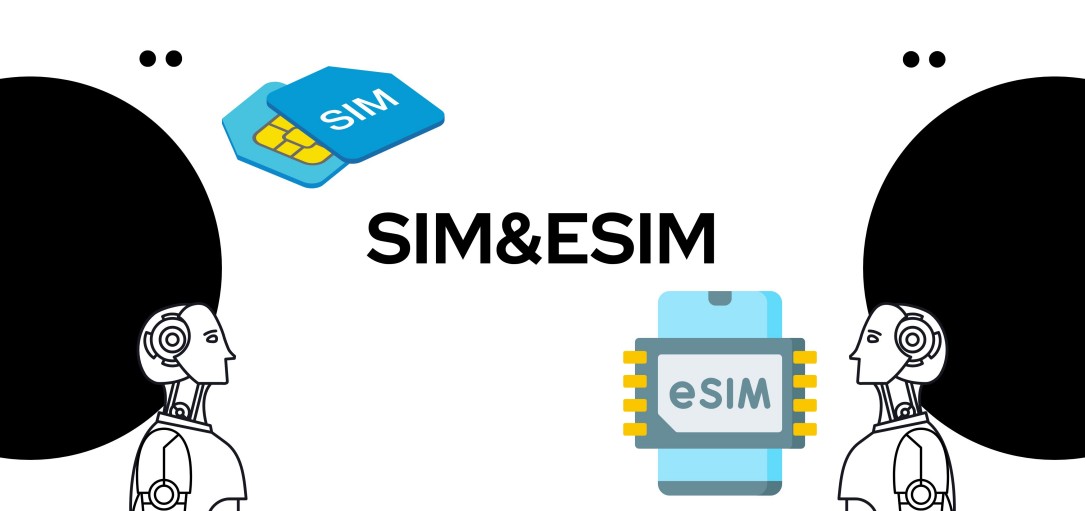

Unlock Instant Connectivity Anywhere You Go With The Best eSIM For Travel
Why bother hunting for local SIM cards or dealing with expensive roaming fees when you travel? An eSIM for travel is a digital SIM profile you install on a compatible smartphone, allowing you to connect to a local network without swapping physical cards. You simply purchase a plan online, scan a QR code or enter an activation code, and your device instantly gains data access in your destination. The key benefit is instant connectivity upon arrival, eliminating the need for physical store visits or precarious SIM tray ejections.
Why Frequent Flyers Are Switching to Digital SIM Cards
Frequent flyers are switching to digital SIM cards because they eliminate the frantic hunt for local SIMs during tight layovers. Instant activation lets you connect the moment you land, bypassing airport kiosks and price-gouging roaming plans. You can pre-load a local data plan before departure, ensuring seamless navigation and communication from the gate. No more juggling physical cards for each country on a multi-stop trip—your phone simply switches between profiles. This quiet efficiency means you actually reclaim those lost minutes of transition and focus on the journey itself. It is the modern traveler’s hard-won shortcut to staying reliably connected without the overhead of plastic.
The Hidden Costs of Traditional Roaming Plans
Traditional roaming plans often bury significant hidden costs beyond the advertised daily rate. Frequent flyers discover charges like per-minute billing for calls, even missed ones, and exorbitant rates for incoming texts. Data speeds can be throttled after a small soft cap, rendering maps and messaging slow, while accidental data use triggers expensive overage fees. Additionally, plan fine print may impose activation fees or require long-term contracts that penalize short trips, making the final bill a shock. These unpredictable expenses, especially from data overages, are a primary reason travelers seek transparent eSIM alternatives.
How an Embedded SIM Simplifies Border Crossings
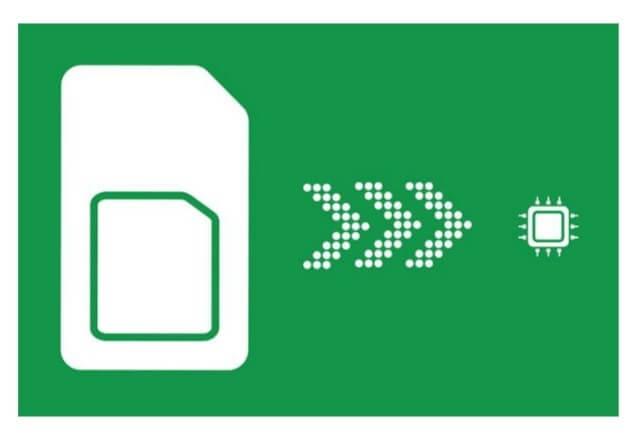
An embedded SIM eliminates the physical handoff at land borders by storing multiple carrier profiles locally. Upon crossing into a new country, the device automatically authenticates against the local network without requiring a manual card swap. This instantaneous network switching removes the downtime previously spent fumbling with SIM trays at congested checkpoints, ensuring continuous GPS navigation and real-time travel alerts are maintained through the transition. The profile selection can be pre-set based on geolocation rules, meaning the SIM self-configures as the border is crossed, providing seamless data connectivity without intervention.
Key Differences Between Physical SIMs and Virtual Profiles

The core distinction lies in hardware dependency versus software flexibility. A physical SIM is a removable chip tethered to a specific carrier, requiring you to swap cards to change networks—a process that risks losing or damaging the tiny plastic. A virtual profile, or eSIM, is a rewritable data file embedded in the device’s chipset, enabling instant carrier switching without physical handling. This makes seamless multi-network access a key advantage for travel. The sequence of activation differs sharply: with a physical SIM, you must insert the card, wait for provisioning, and restart the device. With a virtual profile, you simply scan a QR code or download a carrier app. The list below highlights the practical workflow:
- Purchase an eSIM plan online before departure.
- Install the profile by scanning a QR code sent via email.
- Activate the profile in your device settings upon arrival at your destination.
- To switch carriers, delete the old profile and install a new one—no hardware removal needed.
Choosing the Right Data Plan for Your Destination
Picking the right eSIM plan starts with matching data to your actual habits—don’t just grab the biggest bundle. For a city trip focused on maps and messaging, a 1GB daily plan often beats a bulky weekly option, saving cash. Check if your destination is included in a regional eSIM to cover multiple countries without juggling separate profiles. A plan with speed prioritization can make a real difference when you’re navigating busy transit hubs. Always verify the plan’s coverage zone on your provider’s map, especially for islands or rural areas. Opt for a rolling daily plan instead of fixed data if you’re staying for a week—you’ll avoid paying for unused gigabytes on quiet sightseeing days.
Regional Packages vs. Global Passes: Which Saves You More?
When planning your connectivity, Regional Packages almost always beat Global Passes for savings. A regional eSIM covering Europe or Asia costs a fraction of a worldwide plan, as you avoid subsidizing coverage for continents you skip. Global passes are only cheaper for multi-country trips spanning multiple continents. For focused travel, regional eSIM savings are undeniable, offering better data allowances for the same price. Before departure, map your exact destinations; if you stay within one geographic cluster, the regional route consistently saves more money.
Data-Only Plans vs. Plans with a Local Number
When choosing your travel eSIM, decide between a data-only plan and a local number plan based on your communication needs. A data-only plan excels for pure internet access, perfect for mapping, streaming, and messaging over apps like WhatsApp. Conversely, a plan with a local number is essential for voice calls China eSIM to local businesses or ride-hailing services, which often require a local verification code. An app-based call can still fail if the recipient’s landline doesn’t support VoIP, so factor in your reliance on traditional phone calls before purchasing.
Top Providers That Offer Flexible Short-Term Options
For travelers needing control, leading eSIM providers with flexible short-term plans include Airalo, Holafly, and Nomad. Airalo offers localized packages from one to thirty days, letting you add top-ups without committing to monthly bills. Holafly specializes in unlimited data for short trips, often with instant activation upon landing. Nomad provides region-specific bundles with customizable durations, perfect for multi-stop itineraries. These options let you pay only for the days you need, avoiding carrier lock-in.
How do Airalo and Holafly compare for a 7-day trip? Airalo gives you set data allowances at a low cost, ideal for light browsing, while Holafly offers unrestricted data with a local number, suited for heavy streaming or navigation needs during your stay.
Setting Up Your Device for Seamless Connectivity Abroad
Before departure, install your travel eSIM profile while still on Wi-Fi to avoid activation issues. Ensure your device is unlocked and that dual-SIM settings allow data flow from the eSIM while keeping your primary line active for calls. In your network settings, toggle data roaming on for the new eSIM line, and verify that “Data Switching” enables seamless fallback if one signal weakens.
Always test connectivity by force-selecting the eSIM’s home network in carrier settings before you fly.
Finally, disable automatic updates and background app refresh to conserve your travel data allowance.
Checking Device Compatibility Before You Depart
Before you pack, confirm your phone supports eSIM travel compatibility—not all models do. Check your settings for “Add Cellular Plan” in the mobile network menu; if missing, your device likely lacks the necessary hardware. Unlocked phones from recent generations typically work, but carrier-locked handsets may block foreign eSIMs entirely. Even compatible devices might restrict active eSIMs simultaneously, so verify how many profiles your model can store. A quick visit to the manufacturer’s site for your exact model number prevents airport activation nightmares, ensuring your digital plan loads instantly upon arrival.
Step-by-Step Activation Without a Physical Card
Begin by ensuring your device is unlocked and connected to Wi-Fi. Navigate to your phone’s settings, select “Cellular” or “Mobile Data,” then tap “Add eSIM.” Scan the QR code provided by your travel carrier or manually enter the activation details. Install the new plan, labeling it “Travel” for clarity. Finally, set this eSIM as your primary data line. This entire process takes under two minutes, eliminating any need for a physical SIM. You will be instantly connected upon landing. Step-by-step activation without a physical card is the fastest way to begin roaming.
Managing Multiple Profiles for Multi-Country Trips
When planning a multi-country trip, managing multiple eSIM profiles is essential for avoiding constant reconfiguration. Your device’s eSIM tray can store several profiles, but only two can be active simultaneously—typically one for your home line and one for data. Prioritize profile switching efficiency by labeling each eSIM clearly (e.g., “France Data” or “Japan Voice”) to prevent confusion at borders. Before each country entry, activate the corresponding profile and deactivate the previous one to maintain seamless connectivity without roaming penalties.
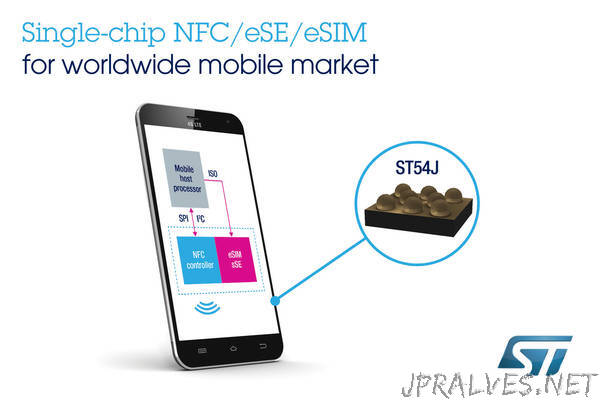
- Label each eSIM profile with the specific country or region for instant identification.
- Keep your home profile active for calls while using a local data eSIM for internet access.
- Deactivate unused profiles to prevent accidental data usage or conflicts.
- Store backup profiles in your cloud account or email for quick re-download if deleted.
Real-World Benefits Beyond Avoiding Roaming Fees
An eSIM for travel unlocks real-world benefits far beyond dodging roaming fees. You gain the ability to maintain a local number for ride-hailing and food delivery apps while keeping your primary line active for banking 2FA codes. This dual-profile setup means you never lose access to critical authentication texts or WhatsApp verification.
The most underrated advantage is seamless route continuity: your maps and navigation never buffer or drop because you’re switching SIMs at the border, letting you cross countries without losing your pre-loaded itinerary.
Additionally, you can assign specific data allowances to different devices, ensuring your laptop stays online for remote work while your phone conserves battery. This flexibility turns connectivity from a travel hurdle into a silent, always-on utility.
Instant Activation Upon Landing in a New Country
Once your plane touches the runway, you can toggle on your eSIM and connect instantly—no hunting for a local shop or fumbling with a physical SIM card. This instant connectivity upon arrival lets you summon a ride-share, message your family, or navigate customs without delay. It transforms the first chaotic moments in a new country from frustrating to frictionless. You skip the airport Wi-Fi struggle and pay-as-you-go data panic entirely.
With eSIM, you land, activate, and go—your connection is ready before you even leave the gate.
Keeping Your Home Number Active While Using Local Data
An eSIM setup lets you deactivate your home line’s data while keeping the number active for essential SMS and voice calls. This prevents costly accidental data usage on your primary plan. You assign local data solely to the eSIM profile, ensuring your home number remains online for two-factor authentication codes or urgent contact. The key is dual-SIM separation of services—your home line stays connected for verification, while your travel eSIM handles all internet access without triggering roaming fees.
Keeping your home number active for SMS and calls while using local data on an eSIM avoids both roaming charges and service interruptions for security codes.
Enhanced Security Features for Travelers
An eSIM enhances traveler security by eliminating the physical SIM card that can be lost, stolen, or cloned. It allows remote management of mobile profiles, so you can instantly deactivate a compromised eSIM without contacting a store. Many eSIM providers offer encrypted data transmission through secure servers. To set up a secure travel connection:
- Purchase a verified eSIM from a reputable provider before departure.
- Install the profile over a secure Wi-Fi connection using the provider’s official app.
- Activate the local profile only upon arrival to avoid network exposure during transit.
This process reduces risks from unsecured public networks and rogue SIM-swapping attacks.
Troubleshooting Common Issues While on the Road
When your eSIM suddenly stops working mid-trip, first toggle airplane mode for 30 seconds to force a network refresh. If data is slow, manually select a different local carrier in your phone’s cellular settings, as automated roaming can pick congested towers. No signal? Verify your eSIM profile is still active and not accidentally deleted; you might need to re-scan the QR code from your purchase email. For activation failures, ensure you have a stable Wi-Fi connection first, then restart your device completely. Connectivity dropouts often resolve by checking your APN settings match your provider’s instructions. If nothing works, most eSIM apps have a 24/7 live chat for immediate troubleshooting assistance.
What to Do If Your Profile Doesn’t Activate
If your eSIM profile doesn’t activate while traveling, first toggle Airplane Mode on and off to force a network refresh. Ensure you have a stable Wi-Fi connection to re-scan your activation QR code or manually enter the details from your provider’s email. If it still fails, restart your device entirely. Sometimes, carriers require you to be in a supported coverage zone before the profile kicks in. Quick profile reactivation often involves deleting the eSIM and re-adding it via your account dashboard. Q: What to Do If Your Profile Doesn’t Activate after trying these steps? A: Contact your eSIM provider’s live chat—they can push a new profile directly to your phone.
Resolving APN and Connectivity Glitches
When your eSIM data stalls, the first step is verifying the Access Point Name (APN). Travel eSIMs often require a specific APN, such as “globaldata,” which may not auto-populate on your device. Manually enter the exact APN from your eSIM’s setup guide, as an incorrect entry blocks all connectivity. Even a single typo in the APN field can render a perfectly active eSIM profile useless. If data still fails, force your phone to re-register with the local network by toggling Airplane Mode for 20 seconds. For persistent glitches, delete and reinstall the eSIM profile; this triggers a fresh handshake with the carrier’s servers. Correctly configuring your APN settings directly resolves the most frequent eSIM connectivity failures while traveling.
Backup Strategies When Wi-Fi Is Unreliable
When Wi-Fi drops, your eSIM acts as the primary lifeline, but you need offline map caching and messaging preloads as a critical backup strategy. Before leaving a stable connection, download Google Maps areas and offline translations for your destination. If the eSIM signal also falters, immediately toggle airplane mode to force a network reconnection. Have a secondary physical SIM or a local prepaid eSIM profile ready to switch via your device’s settings. Q: What if both Wi-Fi and my eSIM fail? A: Enable “low data mode” and restrict background app usage to stretch remaining connectivity while moving to find a public hotspot or cellular tower.
Comparing Costs: Digital SIMs Versus Other Connectivity Hacks
Stuck in a Kyoto convenience store, I once paid ¥3,000 for a physical SIM that lasted three days, while my friend used an eSIM app for half the cost and twice the data. That’s the core difference: digital SIMs cut out the middleman, offering upfront pricing with no roaming surprises. In contrast, portable WiFi hacks often require deposits, daily rental fees, and the chore of returning hardware, adding hidden costs to a trip. A free hotel WiFi hack might seem cheap, but it chains you to the lobby during a spontaneous evening in Barcelona. Ultimately, eSIMs offer the kind of predictable budgeting that lets you stop worrying about every kilobyte you use. They transform connectivity from a constant variable into a fixed, manageable expense—one you can fully set before stepping on the plane.
Pocket Wi-Fi Rentals vs. Embedded Profiles
When comparing Pocket Wi-Fi Rentals vs. Embedded Profiles for travel, the core cost distinction lies in hardware dependency versus device-native integration. Renting a pocket router adds a daily fee for the device itself, plus a separate data plan, increasing the total trip expense. You also face the inconvenience of charging an extra gadget and returning it. Embedded profiles using eSIM technology eliminate the rental hardware cost entirely; you pay only for the data allowance directly through an app. This removes the risk of late-return fines and the weight of carrying a separate device. While rentals offer a fixed, shareable hotspot for multiple devices, embedded profiles typically provide cheaper per-gigabyte rates for a single phone or tablet, making them more economical for solo travelers prioritizing minimal overhead.
Local Prepaid SIMs at the Airport vs. Remote Setup
Buying a local prepaid SIM at the airport is convenient but often comes with a tourist premium, charging double or triple the price of a SIM from a shop downtown. The remote setup advantage of an eSIM bypasses this entirely, letting you activate a local data plan before you land. While a kiosk SIM gives you a physical slot, you waste time queuing and fumbling with tiny cards. A remote eSIM setup costs less overall and has you connected the moment you step off the plane, no airport markup needed.
Airport SIMs charge a convenience fee; a remote eSIM setup saves money and time by activating your plan before you travel.
Hidden Savings from Avoiding Daily Roaming Charges
Avoiding daily roaming fees unlocks hidden travel savings that dramatically reshape your trip budget. Each day without a carrier’s $10–$20 roaming surcharge adds up quickly across a two-week journey. If you connect via a local eSIM profile, those daily activation fees vanish entirely. Over ten days, skipping those recurring charges alone can save $100–$200. This money isn’t spent on connectivity—it stays in your pocket for experiences. The real hidden value multiplies when you travel with family: avoiding four daily roaming passes saves $40–$80 per day. Digital SIMs turn these recurring costs into one-time, low-rate data that never triggers a daily fee.
Future Trends in Global Connectivity for Travelers
Future global connectivity will see travelers seamlessly hopping between networks via eSIM for travel, eliminating physical SIM swaps entirely. A single profile will intelligently switch between local carriers, dynamically selecting the fastest available 5G signal without any manual intervention. Real-time data bundles will become obsolete, replaced by instant top-ups triggered when a traveler crosses a border or consumes a threshold. This always-on, multi-network access means never hunting for Wi-Fi or struggling with spotty roaming, turning any destination into a localized, high-speed experience. Integrated eSIM profiles will also embed with trip management apps, auto-activating coverage upon landing and deactivating upon departure, creating a frictionless, hyper-connected journey.
How 5G and eSIM Technology Are Evolving Together
The evolution of 5G and eSIM technology is creating a seamless travel experience where high-speed connectivity activates instantly upon landing. eSIMs enable travelers to download a local 5G profile before departure, eliminating physical SIM swaps while automatically connecting to the fastest available network. This synergy allows real-time network switching between 5G bands without manual intervention, ensuring consistent low-latency performance for video calls and navigation. As 5G expands, eSIMs will pre-configure devices to prioritize specific frequencies like mmWave for urban areas or sub-6 GHz for rural zones, optimizing signal strength based on location without requiring user action.
The Rise of Bundled Travel Insurance and Data Packages
Travelers increasingly choose single purchases that combine eSIM data with trip insurance, eliminating the need for separate policies. This bundling lets you activate coverage instantly upon arrival, with data serving as the delivery channel for insurance documents. If your flight is delayed, the same package automatically triggers a data top-up for communication while processing a claim. The result is unified travel safety net where connectivity and protection function as one tool. You manage both plans from one app, avoiding the hassle of filing paperwork separately. This integration turns your phone into a proactive travel assistant, not just a connection device.
Predictions for Zero-Roaming Zones Worldwide
Predictions for Zero-Roaming Zones Worldwide suggest a shift from isolated regional bloc agreements to globally distributed, device-level connectivity. In the next few years, travelers will likely activate a single eSIM profile that automatically disconnects from legacy carrier networks when entering a zero-roaming zone, instead prioritizing local eSIM slices from partner networks. This would eliminate manual scans or top-ups. A clear sequence for deployment is expected:
- Multi-country corridors (e.g., ASEAN rail routes) transition first.
- Airport-centric hubs follow, offering seamless handoff upon landing.
- Rural transit routes integrate by 2028, completing continuous coverage.
These zones will rely on pre-negotiated, flat-rate data pools visible within the eSIM app, erasing surprise fees entirely.
What Exactly Is a Travel eSIM and How Is It Different From a Physical SIM?
The Core Technology: How a Digital SIM Profile Works in Your Phone
Key Differences: No Plastic Card vs. Traditional Roaming vs. Local SIMs
How Do You Activate an eSIM Before or During a Trip?
Step-by-Step Setup: Scanning a QR Code or Using an App
Activation Timing: Why Installing Before You Fly Saves Headaches
What Are the Biggest Benefits of Using a Digital SIM While Traveling?
Instant Connectivity Upon Arrival Without Hunting for a Local Store
Keeping Your Home Number Active While Using a Separate Data Plan
How to Choose the Right Travel eSIM Plan for Your Destination
Data Allowances: Figuring Out How Many Gigabytes You Really Need
Coverage Networks: Why Some Plans Use Multiple Local Carriers